





Is Halloween candy bad for my child's teeth?
Halloween candy isn't harmful because of one night of trick-or-treating. It's harmful when it sticks around. Cavities depend on how often and how long sugar sits on your child's teeth, so a single evening of treats followed by good brushing does far less damage than a candy bowl that lasts all through November.
At Dr. Lulu Pediatric Dentistry, we encourage families to enjoy Halloween with a simple plan instead of banning candy altogether. The bacteria in your child's mouth feed on sugar and produce acid that wears on tooth enamel, and each time your child snacks on candy, that process starts again. The goal is to limit how many times, and for how long, teeth are exposed.
Which Halloween candies are the worst for kids' teeth?
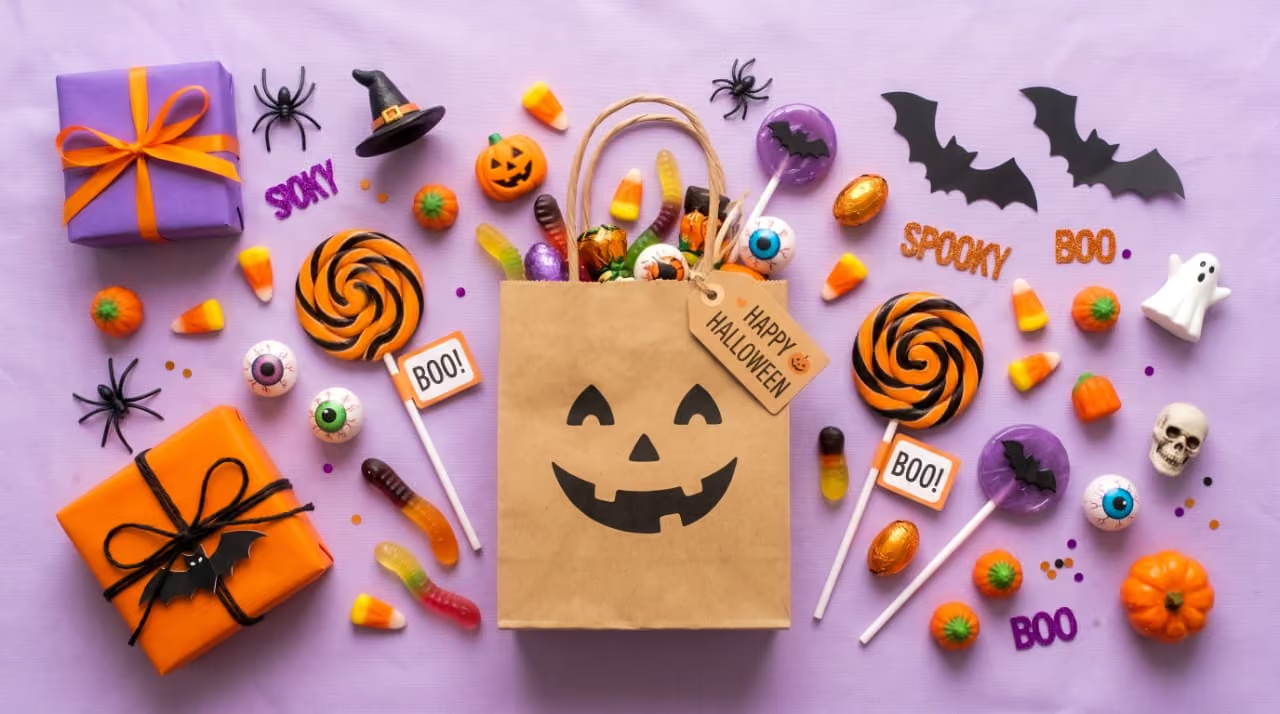
Sticky, chewy, hard, and sour candies cause the most trouble because they keep sugar or acid on the teeth the longest. The biggest offenders include:
- Sticky and chewy candy such as gummies, taffy, caramels, and fruit chews, which cling to the grooves of the teeth and keep sugar in place long after the candy is swallowed
- Hard candy such as lollipops and jawbreakers, which dissolve slowly and bathe the teeth in sugar for a long time, and which can chip a tooth if bitten
- Sour candy, which combines sugar with acid that can soften enamel
- Candy corn and similar candies, which tend to lodge between teeth
- Chocolate bars with caramel or nougat, because the chocolate clears quickly but the chewy center lingers
Which Halloween candy is best for teeth?
Plain chocolate, especially dark chocolate, is generally the gentler choice. Chocolate melts and clears from the mouth faster than sticky or hard candy, and dark chocolate contains less sugar than milk chocolate. Gentler doesn't mean tooth-healthy, but it's a smarter pick when your child is choosing what to keep.
Non-candy treats such as stickers, small toys, and temporary tattoos are another easy option. For toddlers, keep in mind that hard and chewy candies can also be choking hazards.
Is candy riskier for kids with fillings, crowns, or space maintainers?
Yes, sticky and hard candy can be tougher on teeth that have already had dental work. Chewy candy can tug at tooth fillings, loosen dental crowns, or pull a space maintainer out of place, and hard candy can chip or crack teeth.
For children with restorations, lean toward chocolate and non-sticky options, and keep portions small. If a filling or crown feels loose, a tooth becomes sensitive, or you notice a rough or broken spot after candy, let your child's dentist know rather than waiting for the next checkup.
What's the best way to let my child eat Halloween candy?
Let your child eat candy in one sitting, with a meal or right after one, instead of snacking on it throughout the day. Saliva flow is higher during meals, which helps wash away sugar and acid, while grazing keeps teeth exposed again and again.
A simple candy plan can make this easy:
- Talk through the plan before trick-or-treating, including how many pieces your child can keep.
- Let your child choose a few favorites and set aside the gentler options.
- Serve candy with a meal or dessert rather than as an all-day snack.
- Have your child rinse with water after eating candy and brush before bed with fluoride toothpaste.
- Keep candy out of bedrooms and out of sight to prevent nighttime snacking.
- Set a cutoff date for the rest of the haul.
What should I do with leftover Halloween candy?
Pick a cutoff date and get the extra candy out of the house. A few easy ways to do that:
- Let your child keep a small handful of favorites and toss the candy they don't love
- Trade the rest for a small toy, book, or family activity
- Donate the extra to a local organization that accepts candy donations
- Store anything you keep in the pantry, not in your child's room
Next year, consider handing out non-candy treats to help other families, too.
How can I protect my child's teeth beyond Halloween?
Consistent daily habits matter more than any single holiday. A strong routine includes:
- Brushing twice a day with fluoride toothpaste and cleaning between teeth daily
- Choosing tooth-friendly foods and drinks, as covered in our guide to healthy snack and drink choices for kids
- Keeping up with regular checkups and cleanings, which is why we talk about the importance of preventive care in children's dentistry
- Asking about dental sealants, a thin protective coating that shields the deep grooves of back teeth where sticky candy likes to hide
If you have questions about your child's cavity risk, Dr. Lulu Molina and our team can help you build a prevention plan that fits your child.
Frequently Asked Questions
How much Halloween candy is okay for a child?
There's no single magic number, because how often and when candy is eaten matters more than the exact amount. A reasonable approach is to let your child keep a few favorites, eat them with meals, and move the rest out of the house within a few days.
Should my child brush right after eating candy?
Rinsing with water right after candy helps wash away sugar and acid, and brushing before bed with fluoride toothpaste is the most important step. The goal is never to let candy sit on the teeth overnight.
Is sugar-free candy better for teeth?
Sugar-free candy removes the sugar, but it can still be sticky or acidic, so the texture and type of candy still matter. Treat it as a smaller improvement rather than a free pass.
What if my child ate way too much candy on Halloween night?
One big night does far less harm than weeks of leftover candy. Have your child rinse with water, brush before bed, and return to your normal routine the next day.
When should my child see the dentist after Halloween?
Keep your child's regular checkup schedule, which is typically every six months. Contact your dentist sooner if your child has a toothache, tooth sensitivity, a loose filling or crown, or a new dark spot on a tooth.
Schedule Your Child's Checkup
Whether Halloween left behind a few extra treats or a few extra questions, our team is here to help families across Scottsdale, McCormick Ranch, DC Ranch, Grayhawk, and Scottsdale Ranch keep their children's smiles healthy. Call (480) 955-5858 or request an appointment through our Book Appointment page.